
Homemaker
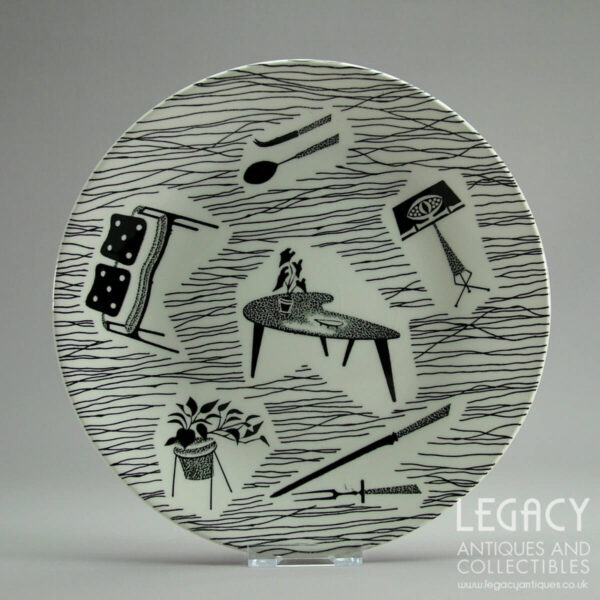
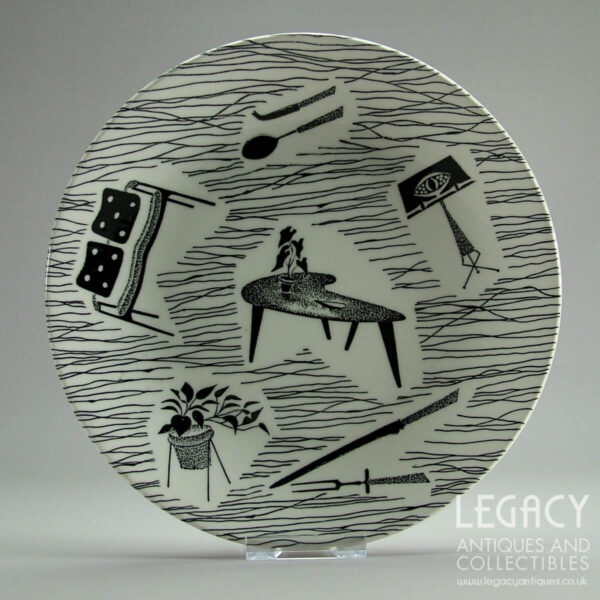
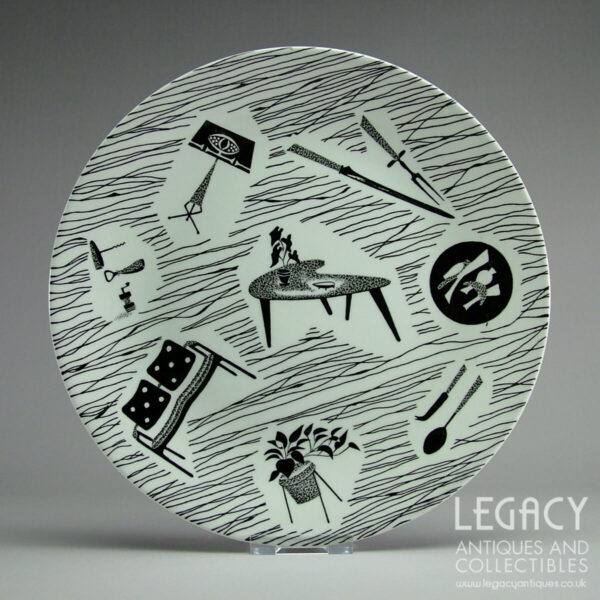
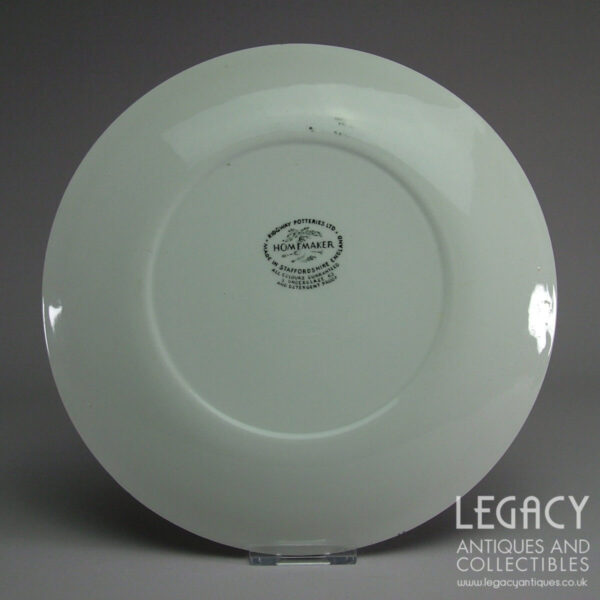
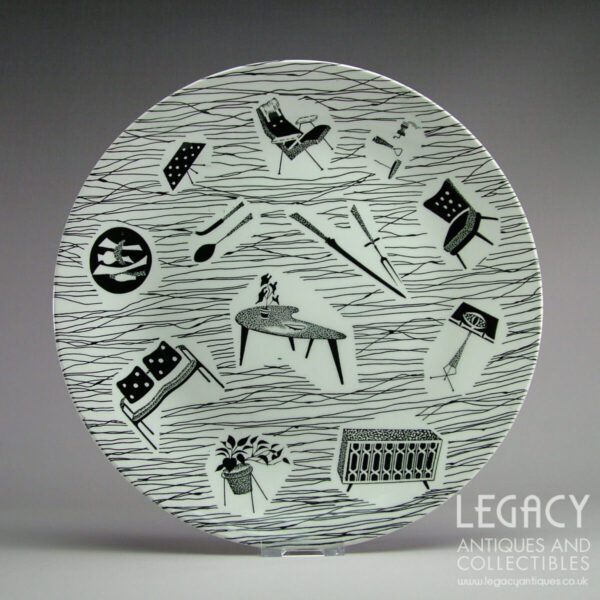
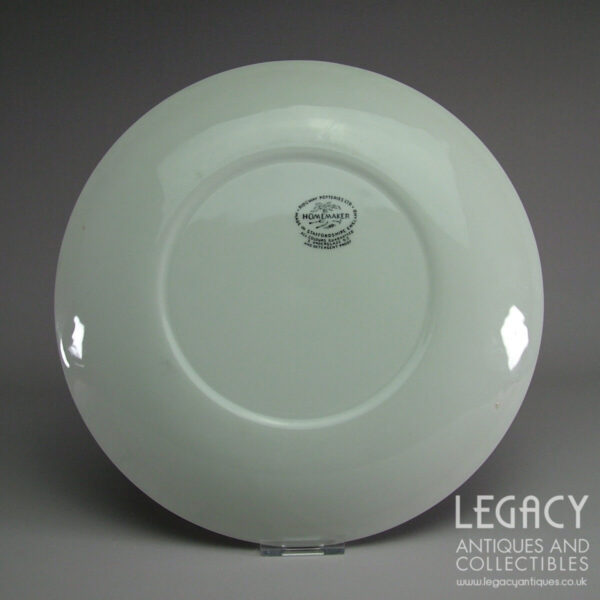
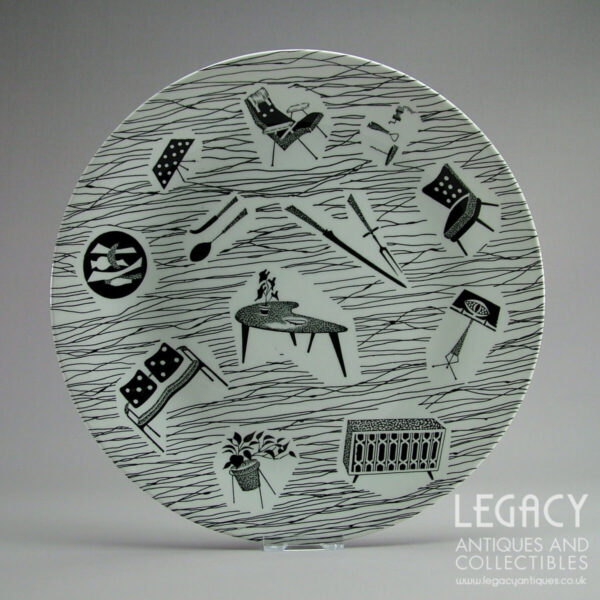
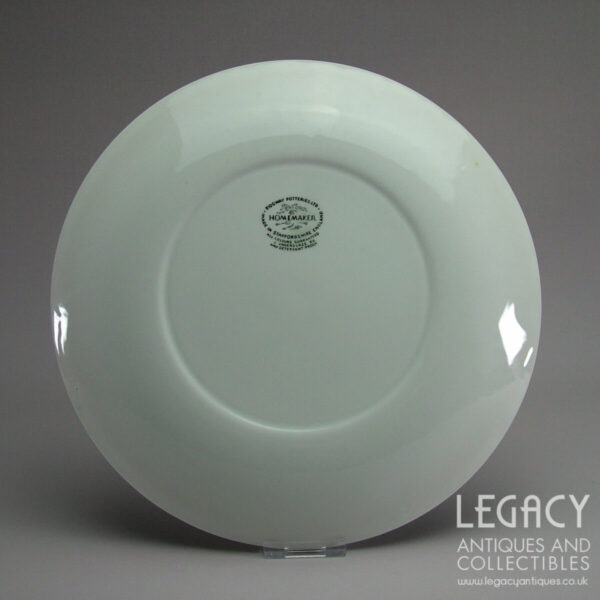
The ‘Homemaker’ design was conceived by Enid Seeney for the Ridgway Potteries and released in 1958 exclusively through the Woolworth Group.
Enid Seeney was still a teenager when she joined Ridgway in 1951. She studied at the Burslem School of Art, and then spent a year at the Royal College of Art in London (1954-1955). During this period, she kept a scrapbook of the latest designs, including furniture and household items; this scrapbook would eventually become the inspiration behind the pattern.
As post-war restrictions were lifted and designers turned away from the complex, floral motifs that had been popular for so long, they took inspiration from clean lines and unusual, abstract patterns and shapes that would soon define the era.
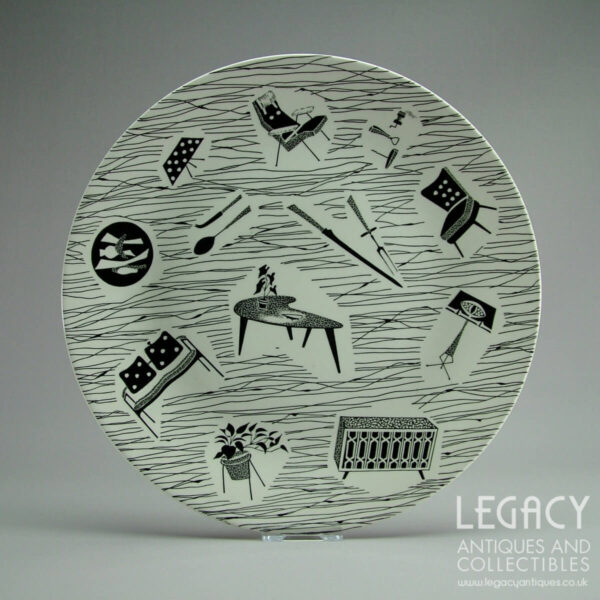
The ‘Homemaker’ pattern is seen as more of a snapshot of fashionable fifties furnishings. The long sideboard is believed to be inspired by the Helix Sideboard, designed by David Booth for Gordon Russell in 1950; it would be exhibited at The Festival of Britain in 1951. The reclining chair is based on a design by Robin Day in 1952, and the two-seater settee was adapted from a 1954 design by Prince Sigvard Bernadotte, another well-known furniture designer.
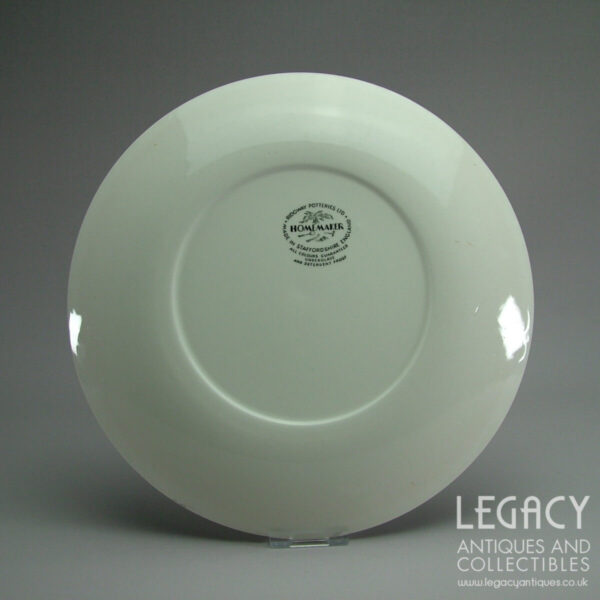
‘Homemaker’ was initially released in the ‘Metro’ range of shapes, introduced by Tom Arnold, the creative director of Ridgway. The rimless plates allowed for all-over decoration, and the smooth bodies of the tea and coffee pots gave a clean silhouette. This combination of a modern shape and a contemporary pattern made ‘Homemaker’ an instant success. By 1960, demand was so high that Ridgway had to outsource additional production to Alfred Meakin. Ridgway used a blue-white clay, whereas Alfred Meakin used an ivory-tinted clay; this means that there is a minor but noticeable difference in the backgrounds of the ‘Homemaker’ wares.
In 1966, the ‘Cadenza’ shape was introduced. This design, by Margaret Simpson, came in as demand for ‘Homemaker’ was waning; since production ceased around 1970, there are fewer pieces in circulation in the ‘Cadenza’ shape, so they are often more costly.
There is a red variation of the ‘Homemaker’ pattern, which is believed to have been produced for the Australian market. This is rarer still, and these pieces command high prices to this day.
Sources:
‘Homemaker China’ by Madeleine Marsh, H&A Magazine, November 2002
‘Homemaker’ by Chris Marks, Antiquexplorer Magazine, July 2006
20th Century Ceramics
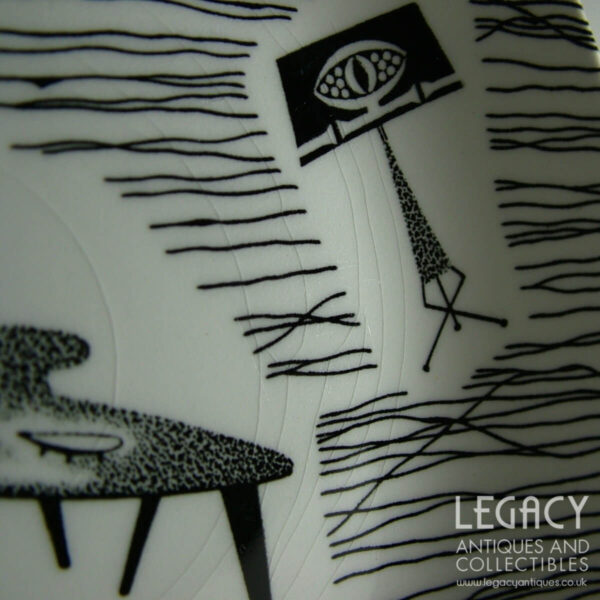
Ridgway Potteries Ltd ‘Homemaker’ Design Tea Plate (7″) (Meakin Production)
20th Century Ceramics
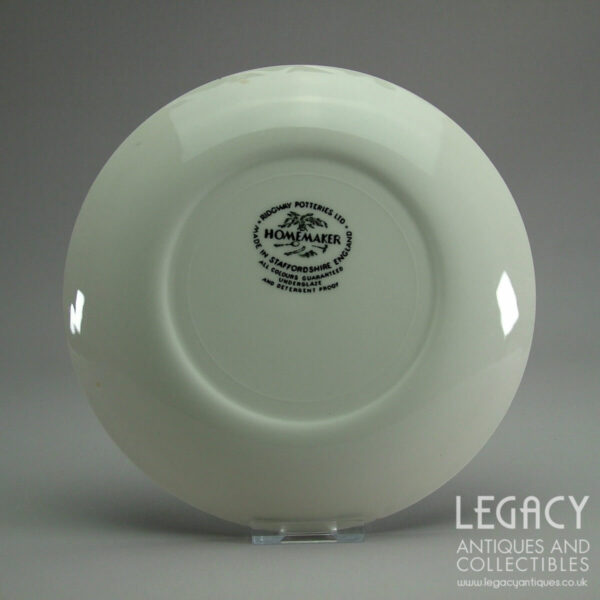
Ridgway Potteries Ltd ‘Homemaker’ Design Tea Plate (7″) (Meakin Production)
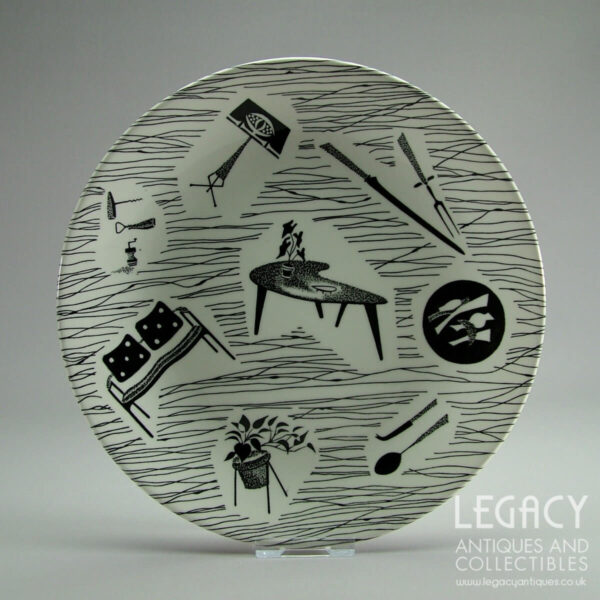
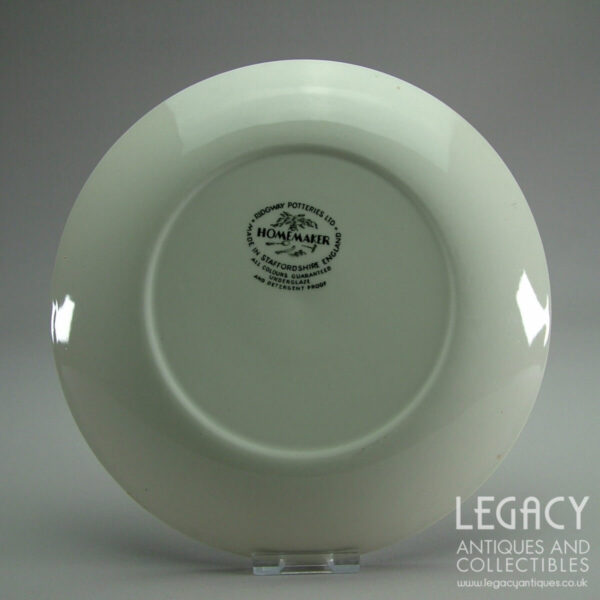
20th Century Ceramics
Ridgway Potteries Ltd ‘Homemaker’ Design Salad Plate (8″) (Meakin Production)
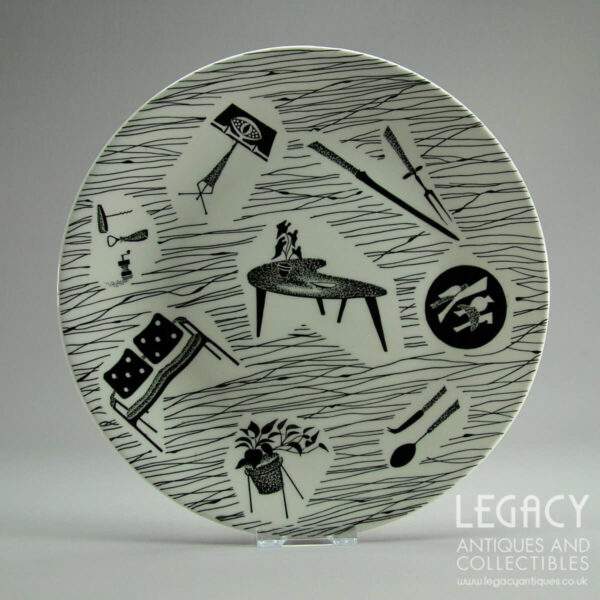
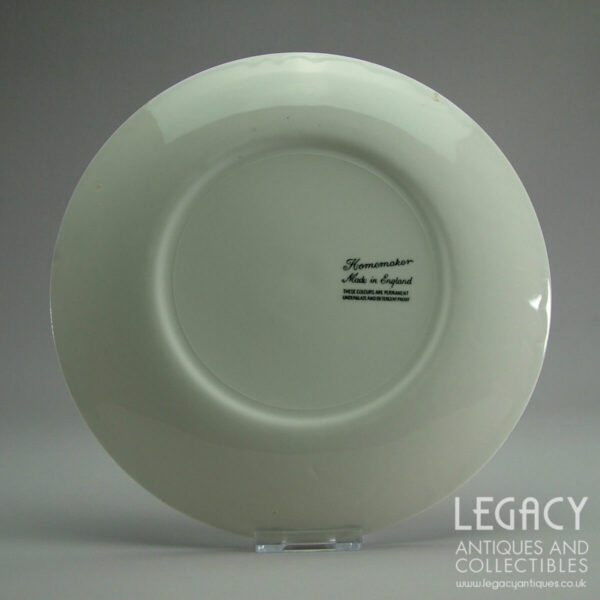
20th Century Ceramics
Ridgway Potteries Ltd ‘Homemaker’ Design Salad Plate (8″) (Meakin Production)
20th Century Ceramics
Ridgway Potteries Ltd ‘Homemaker’ Design Salad Plate (8″) (Ridgway Production)
20th Century Ceramics
Ridgway Potteries Ltd ‘Homemaker’ Design Dinner Plate (10″) (Ridgway Production)
20th Century Ceramics
Ridgway Potteries Ltd ‘Homemaker’ Design Dinner Plate (10″) (Ridgway Production)
20th Century Ceramics
Ridgway Potteries Ltd ‘Homemaker’ Design Dinner Plate (10″) (Meakin Production)