


This is a striking example of an opaline glass vase, maker unknown but stylistically dating to around 1850.
The vase is of classic form, with a wide everted rim that tapers in to meet the urn-shaped body. There is a thick, discoid collar surmounting the plinth-like foot. The latter has a polished pontil on the underside and is unmarked.
The piece is made from white or opaline glass, over which has been applied a fine matte blue enamel layer. Around the centre of the vase, it is hand-decorated in enamels with a complex floral design consisting of a white Convolvulus arvensis (field bindweed) intertwined with what appears to be a Calluna vulgaris (common heather).
In Victorian floriography, Convolvulus could represent resilience or long-lasting bonds, and Calluna was associated with protection and resilience.
There is a faint band of gilding on the inside of the rim. On the exterior of the vase, there are concentric bands of gilding below the rim. This gilded motif is repeated at the base of the body and foot; there are also three concentric blue enamel rings on the latter.
This vase is very similar in shape and form to pieces produced by Richardson around this time.
It has a height of approximately 29.9cm, with a diameter across the rim of about 10.5cm and across the foot of about 8.5cm.
It has an unwrapped weight of 1090g.
It is in excellent condition, with no chips or cracks, although there is considerable wear to the gilding in places (see pictures).
| Weight | 2.0 kg |
|---|---|
| Boxed | No |
| Main Colour | Blue (Light) |
Related Items



20th Century Glass
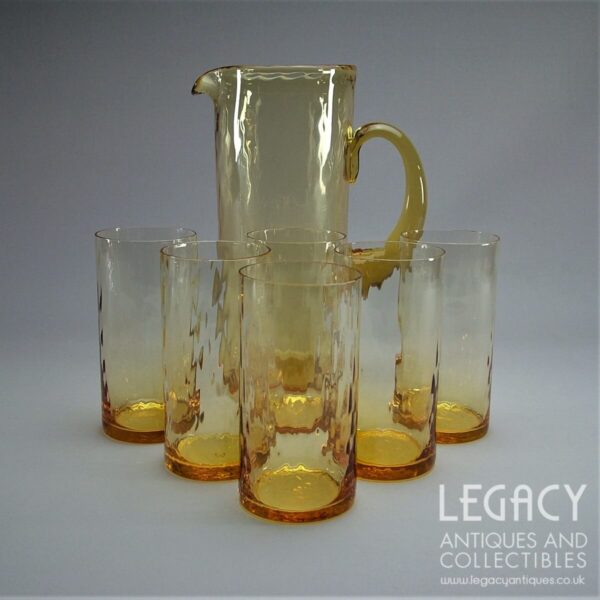
High Quality Amber Glass Cylindrical Lemonade Jug and Six Tumblers c.1930s

20th Century Glass
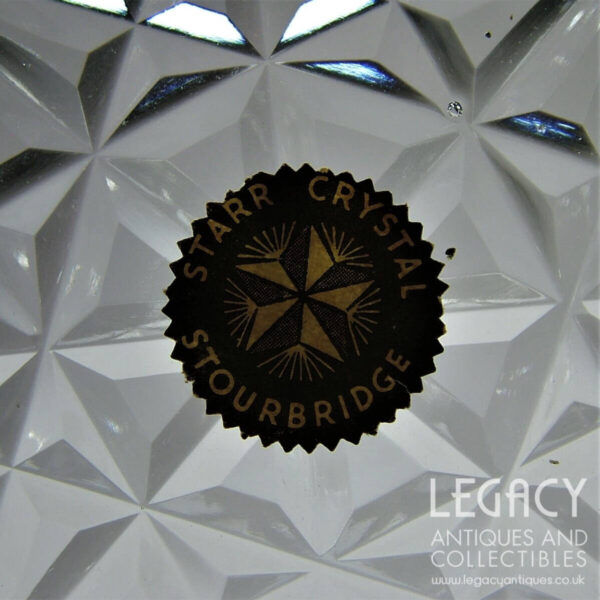
1950s Starr Crystal (Stourbridge) Highly Cut Lead Crystal Fruit Bowl with Original Sticker




19th Century Glass